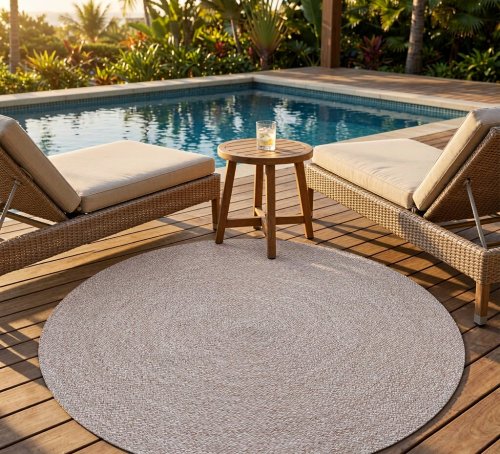
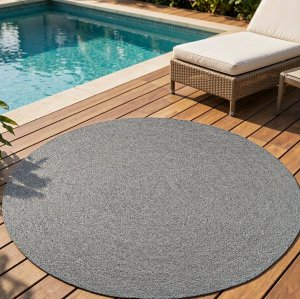
An outdoor round carpet braided from Textilene yarn in a warm heathered greige ground — a grey-beige shade flecked with taupe — wound continuously into fine concentric coils from the centre point out to the rim. Textilene is a coated composite yarn rather than a solid one: a bundle of high-tenacity polyester filament sits inside a PVC coating that carries the pigment and the UV stabilisers, and water meets that coating on the outside of each yarn. Rain and pool splash stay on the coated face and move off the coil, and the cord surface air-dries after a downpour. The result is a floor covering that resists pool chlorine, coastal salt air and summer sun — specified for patios, pool decks, balconies and terraces, and made to order for OEM and ODM programmes.
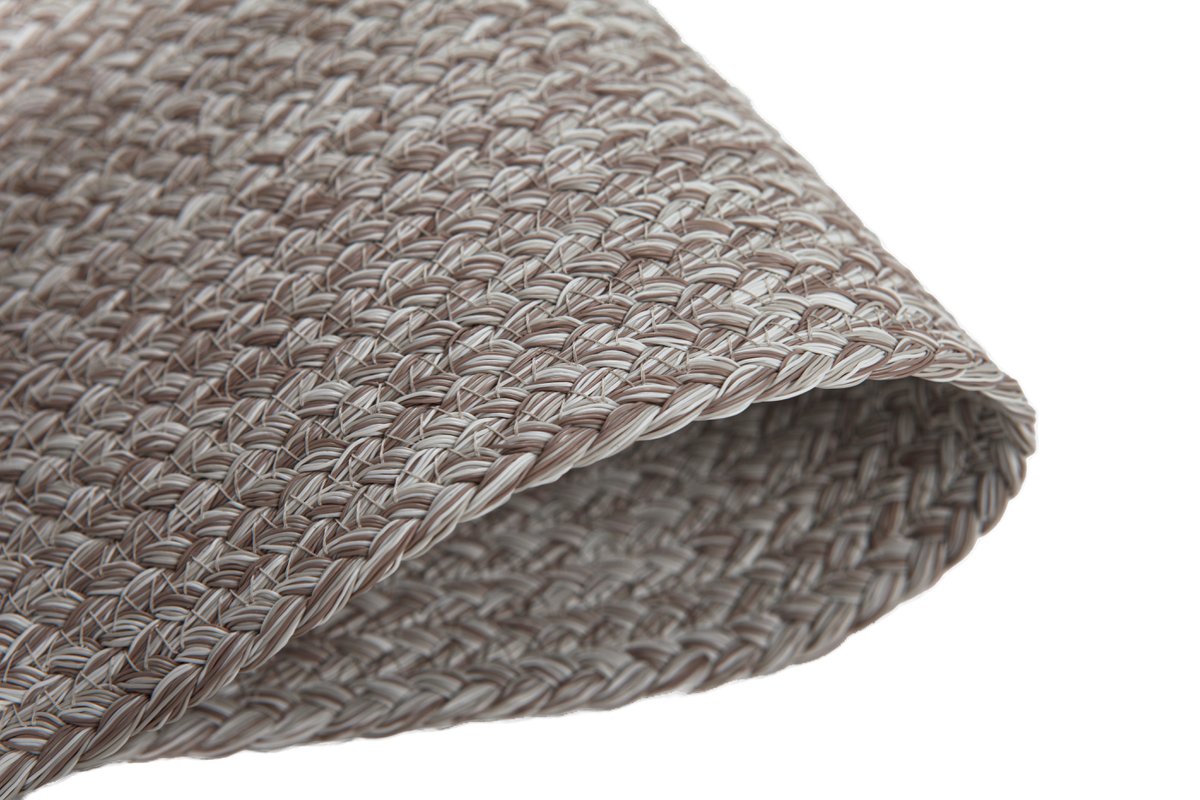
Lifted at the edge — the coil rolls for packing and lies flat again in use, a sign of a well-relaxed wind.
Product Highlights
Four properties of the yarn decide how this carpet behaves outdoors: its composite construction, the PVC coating that forms the outer face, the air paths left open by the braid, and the stabilisers carried inside the compound.
A Coated Face, Not a Bare Fibre
Cotton and jute meet water bare and take it in. Here the outermost layer is PVC compound carrying the pigment and the UV stabilisers, so water stays on the surface of the yarn.
Polyester Filament, PVC Coating
Each yarn is a bundle of high-tenacity polyester filament inside a PVC coating. The filament carries the tensile load; the coating carries the colour and takes the weather.
Breathable Braid Structure
Braided yarn leaves air paths running through the coil, so the carpet does not trap ground heat or hold damp underneath the way a solid-backed mat does.
Chlorine, Salt and Sun Stable
The compound is formulated to resist pool chlorine, coastal salt air and UV exposure, with a three-year outdoor colour rating behind the shade.
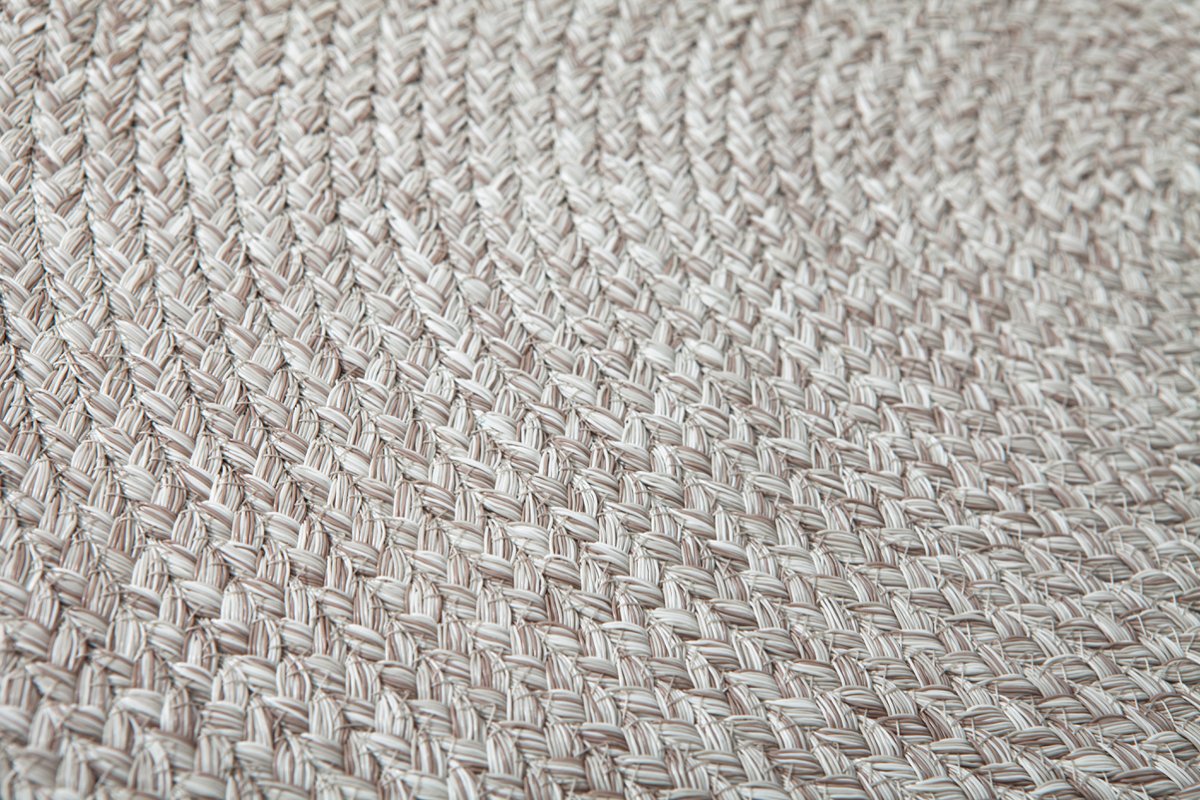
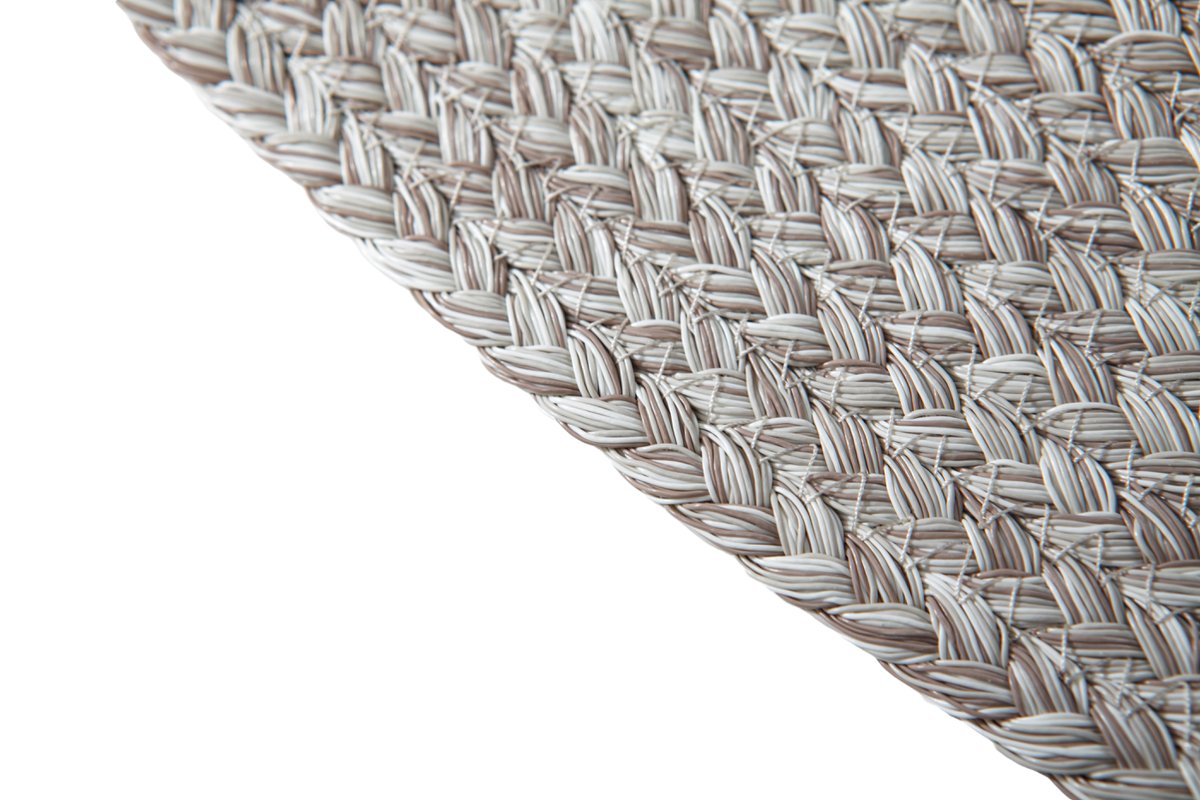
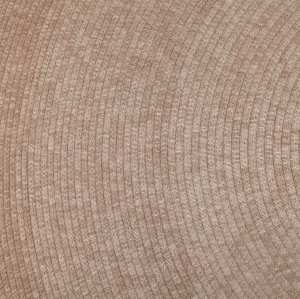
The yarn up close — stone-white and taupe Textilene filaments braided into a herringbone face.
Construction, Explained
A coil carpet is only as good as the yarn it is wound from and the join between one row and the next. Each element below is a manufacturing decision, not a decorative one.
Concentric Radial Wind
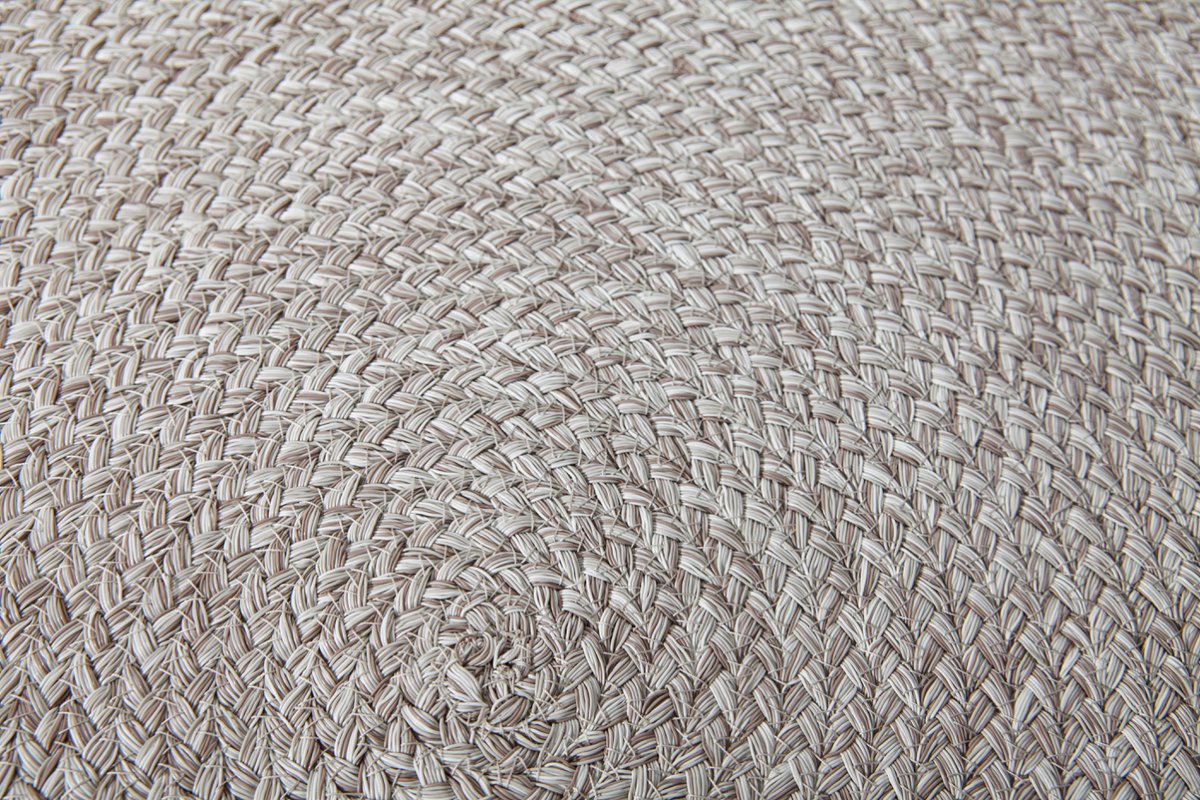
Yarn is wound continuously from the centre point out to the rim, so tension is distributed evenly across every axis. The round stays circular — no cupping at the centre and no lifting at the edge.
Herringbone Braid Structure
Each cord is braided from Textilene yarn in a tight herringbone pattern, so the surface reads as one even texture across the whole carpet, the braid face takes the abrasion of foot traffic and grit, and the structure stays breathable through its depth.
One Yarn Type, Centre to Rim
Every cord is braided from the same Textilene yarn, so the coil behaves evenly across its full diameter — no mixed materials, and no change in feel or colour from the centre ring out to the rim.
Closed Outer Edge
The final coil is finished with a closed edge that follows the circumference, giving the carpet a defined perimeter rather than a loose yarn end that frays with use.
Low, Stable Profile
The low-profile coil clears door thresholds and furniture bases without creating a trip lip, and resists riding up at the edge over time.
The Yarn Itself
Textilene is a composite yarn: a high-tenacity polyester filament bundle, coated in a PVC compound that carries the pigment and the UV stabilisers. The whole carpet is braided from that yarn, and the same yarn runs from the centre of the coil to the rim. That structure is why the surface can be hosed down in place and why the coil feels as firm as it does.
Feature · Composite Yarn
Each yarn is a high-tenacity polyester filament bundle under a PVC coating. The filament supplies the strength; the coating supplies the colour, the UV package and the outer face.
Advantage · Coating Meets the Water
Water reaches the PVC coating on the outside of each yarn rather than the raw filament, so rain and pool splash sit on the coated face and run off the coil, and the cord keeps its diameter instead of swelling out of pitch.
Benefit · Rinses Clean, Dries Fast
A garden hose lifts most marks, and the cord surface air-dries on the deck afterwards, so the carpet does not stay damp or pick up the musty smell that cotton and jute rugs develop outdoors.
Composite yarn: a high-tenacity polyester filament supplies the strength, and the PVC coating carries the colour and the UV package.
Water runs off: rain and spillage stay on the coated yarn face and move off the coil rather than soaking into it.
Air moves through: the braided structure lets air circulate through the coil, so the carpet does not hold ground heat or trapped damp.
Holds its size: the yarn keeps its diameter wet or dry, so coil pitch and concentricity stay even across the carpet.
Built for outdoors: sun, rain, pool chlorine and salt air are the working conditions this yarn is specified for.
The usual failure mode of an outdoor rug is a body that stays wet long after the surface looks dry. Here the yarn is the whole structure, and nothing sits between the cords to hold moisture after a rinse.
Why Textilene for an Outdoor Carpet
Textilene was developed for outdoor furniture, shade cloth and poolside seating, and those are exactly the conditions a terrace carpet meets. Six properties carry across from the yarn to the finished floor.
Colour in the Compound
Pigment is dispersed into the PVC compound before it coats the filament, so there is no printed layer to abrade away. The shade will not rub off, fade patchily or bleed onto decking.
UV-Stabilised Throughout
Stabilisers are carried in the compound rather than sprayed on afterwards, shielding the yarn from photo-degradation, chalking and embrittlement, and giving a three-year outdoor colour rating.
Pool Chlorine and Sea Air
The compound is formulated to resist chlorinated pool water and coastal salt air, the two conditions that age natural-fibre rugs fastest, so poolside and seaside terraces are primary applications rather than compromises.
Breathable Underfoot
Air circulates through the braid rather than being trapped under a solid backing, so the surface stays cooler in direct sun and the deck beneath it dries after rain.
Light Enough to Move
Coated polyester is light for its bulk, so a large diameter carpet can be lifted, rolled and stored by one person when the season turns instead of needing two.
Abrasion and Flex Resistance
The smooth coated face absorbs friction at every crossover, so braid-to-braid contact under foot traffic wears far more slowly than a twisted, fibrous cord.
Textilene Compared with Natural Fibres
Cotton, jute and sisal are the usual choices for a round outdoor carpet, and they share one weakness: a fibre that drinks water. The table below is the specification difference, stated plainly.
Property
Textilene yarn — this carpet
Cotton, jute and sisal
Water
Stays on the coated yarn face and runs off the coil
Taken into the fibre, which swells and tightens the weave
Drying
Cord surface air-dries on the deck after a rinse
Stays damp for hours, often longer underneath
Mould and odour
Resists mildew and the musty smell of damp fibre
Damp fibre feeds mildew and odour between cleanings
Sun
Pigment and stabilisers in the compound, three-year colour rating
Fades and embrittles under sustained exposure
Pool and coast
Formulated against chlorine and salt air
Chlorine and salt degrade the fibre
Cleaning
Hose down, mild detergent, air-dry flat
Spot cleaning only; rinsing through is slow
Weight
Light for its bulk; one person can lift and roll it
Heavy, and heavier still once wet
Underfoot
Smooth coated face on a springy braid
Coarse surface that can prickle through thin soles
Natural fibre remains the right choice for sheltered, dry interiors. For an uncovered terrace, a pool surround or a coastal balcony, the coated yarn changes what the carpet can be asked to do.
Performance Under Real Conditions
Sun Exposure
Colour is rated for three years of direct outdoor use. Because the pigment sits inside the compound, sunlight degrades the surface far more slowly than it does a printed alternative.
Rain and Poolside
Water sits on the PVC coating rather than soaking into the yarn. Squalls pass, the cord surface air-dries, and the terrace is usable again quickly.
Chlorine and Salt Air
Splash-out from a chlorinated pool and salt-laden coastal wind are conditions the compound is formulated for, so the carpet can stay at the water's edge rather than being moved under cover.
Foot and Furniture Load
The braid cushions underfoot while holding a firm, level surface. Chairs and tables sit without rocking, and the structured coil recovers its shape once the load is removed.
Specification
Standard specification below. Diameter, shade and edge finish are made to order.
Material
Textilene yarn — high-tenacity polyester filament with a PVC coating, UV-stabilised in the compound
Construction
Herringbone-braided yarn wound into concentric coils
Shape
Round
Pattern
Herringbone braid on a heathered ground, wound in fine concentric coils
Colour
Heathered greige — grey-beige flecked with taupe (custom palettes on request)
Colour Fastness
Pigment in the PVC compound, three-year outdoor colour rating
UV Stability
Stabilisers carried in the compound, resistant to chalking and embrittlement
Pool and Coastal Use
Formulated to resist chlorinated water and salt air
Mildew Behaviour
Resists mildew and musty odour in damp conditions; braid airs through
Breathability
Braided structure lets air circulate through the coil
Diameter
160–300 cm standard; other sizes on request
Moisture Behaviour
Water sits on the yarn surface and runs off; the cord surface air-dries after rain
Outdoor Suitability
All-weather; rated for uncovered patios, decks and poolside use
Edge
Closed continuous rim
Application
Patio, pool deck, balcony, terrace, garden, sunroom
Care
Vacuum or hose down; mild detergent and soft brush; air-dry flat
Customisation
Diameter, palette, coil pitch, edge finish, label and packaging
Supply
OEM / ODM, 100 pcs per size, full container and LCL
At the centre point — the winding starts here and runs outward, keeping tension even across the round.
What It Does for the Space
Defines the Zone
The round form anchors a seating group the moment the carpet lands — no furniture layout needed to make the area read as one unit.
Soft Landing Underfoot
Springy braided weave feels warm and forgiving under bare feet, even over hard stone, tile or deck boards.
A Warm, Neutral Palette
The heathered greige ground sits calmly beside timber, rattan, stone and green planting — a neutral with warmth that reads designed rather than loud.
Moves With the Season
Light enough for one person to lift and roll, so it can go under cover for winter or be shifted out of the sun without needing two people.
Where It Works
Patio and Terrace
Poolside Deck
Balcony and Sunroom
Garden and Campsite
The round format suits a defined outdoor group — a lounge set, a balcony table for two, or a pair of sun loungers — and anchors it without needing a rectangular footprint. Laid on decking, stone or timber, the surface is dry again soon after a downpour, so the space is usable again quickly. Coastal terraces and chlorinated poolsides are listed deliberately: those are the sites where the coated yarn earns its place. Sheltered indoor spots work too, but this carpet is specified first for open-air use.
OEM and ODM Programme
Carpets are coil-woven in our own facility from Textilene yarn we specify and control ourselves, which keeps diameter, shade and lead time under direct control rather than at a subcontractor's schedule.
01
Brief and Sample
Send diameter, colour reference and target construction. We return a strike-off for approval.
02
Yarn and Colour Run
Textilene yarn is compounded to the approved shade and checked for batch-to-batch consistency.
03
Coil Weaving
Carpets are woven to the confirmed diameter with coil pitch and winding tension held to specification.
04
Inspection and Packing
Diameter, concentricity, edge integrity and shade are checked before rolling and export packing.
Frequently Asked Questions
What is Textilene, and why use it for an outdoor carpet?
Textilene is a PVC-coated high-tenacity polyester yarn, developed for outdoor furniture, shade cloth and poolside seating. The compound carries the pigment and the UV stabilisers, the filament gives it tensile strength, and the finished yarn is smooth enough to braid into a dense coil. It is used here because it holds colour in sunlight, resists chlorine and salt air, stays firm under furniture load and dries quickly after rain.
How does it cope with pool chlorine and sea air?
Both are formulated for at the yarn stage rather than applied afterwards. The PVC compound resists chlorinated pool water and salt-laden coastal air, which are the two conditions that break down cotton, jute and sisal fastest. Poolside and coastal terraces are therefore primary applications for this carpet, not compromises.
What makes a coil-woven round different from a plain round rug?
The whole carpet is wound from one continuous cord rather than cut and joined, so there are no spliced segments or visible breaks across the surface. Continuous radial winding also distributes tension evenly, which keeps the carpet lying flat instead of cupping at the centre or waving at the edge.
How is it cleaned and maintained?
Vacuum it, or hose it down and let it air-dry flat. Work any stubborn marks with a mild detergent solution and a soft brush. Because nothing sits between the cords and there is no backing layer beneath it, there is nowhere for moisture to be held after a rinse.
Can the diameter and shade be customised?
Both are made to order. Diameters from 160 cm to 300 cm are standard and other sizes can be quoted; the greige palette, coil pitch, edge finish, label and packaging can be matched to an existing range.
At the rim — the outer coil closes the circumference, so the perimeter stays defined in use.
Request a Quotation
Send us your diameter, shade reference and order quantity, and we will confirm pricing, sampling and lead time.